AWS Service - SQS
I currently work
SQS:
Standard Queue
Oldest offering (over 10 years old)
Fully managed service, used to decouple applications
Attributes:
Unlimited throughput, unlimited number of messages in queue
Default retention of messages: 4 days, maximum of 14 days
Low latency (<10 ms on publish and receive)
Limitation of 256KB per message sent
Can have duplicate messages (at least once delivery, occasionally)
Can have out of order messages (best effort ordering)
Producing Messages
Produced to SQS using the SDK (SendMessage API)
The message is persisted in SQS until a consumer deletes it
Message retention: default 4 days, up to 14 days
Message size up to 256KB
Example: send an order to be processed
Order id; Customer id
Any attributes you want
SQS standard: unlimited throughput
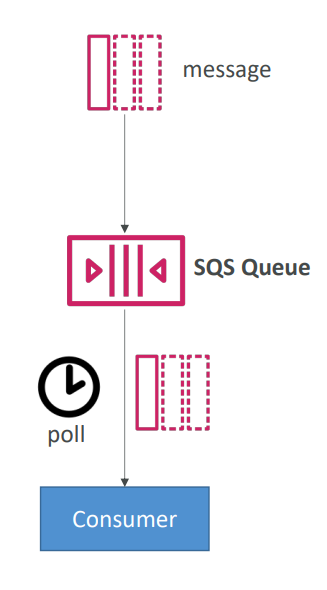
Consuming Messages
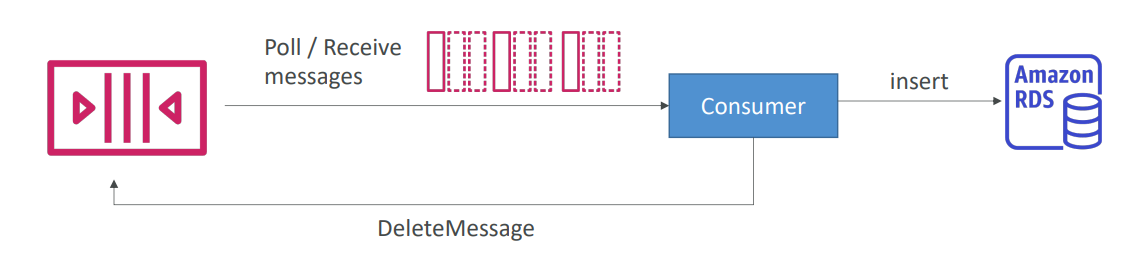
Consumers (running on EC2 instances, servers, or AWS Lambda)
Poll SQS for messages (receive up to 10 messages at a time)
Process the messages (example: insert the message into an RDS database)
Delete the messages using the DeleteMessage API
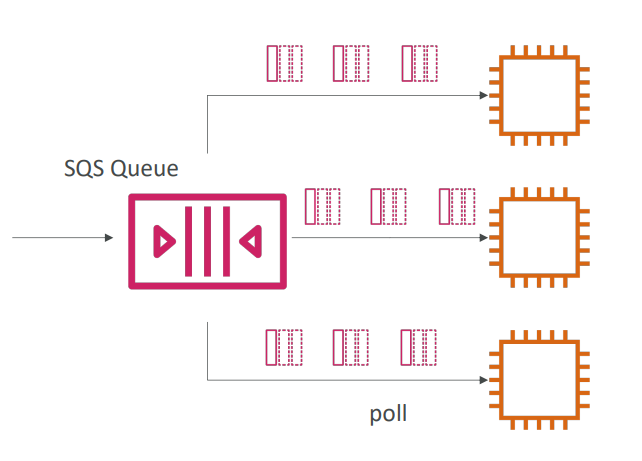
Multiple EC2 Instances Consumers
Consumers receive and process messages in parallel
At least once delivery
Best-effort message ordering
Consumers delete messages after processing them
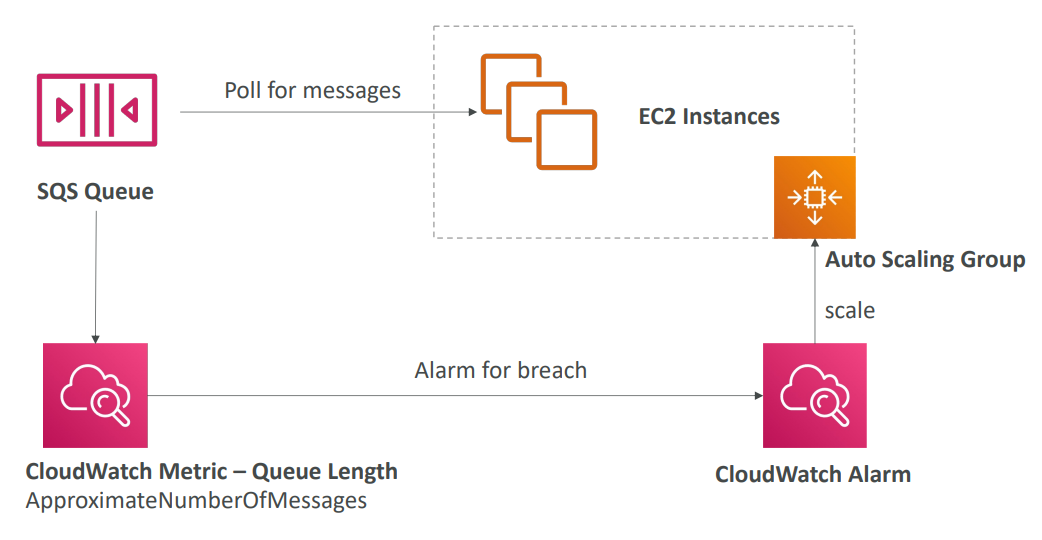
We can scale consumers horizontally to improve throughput of processing
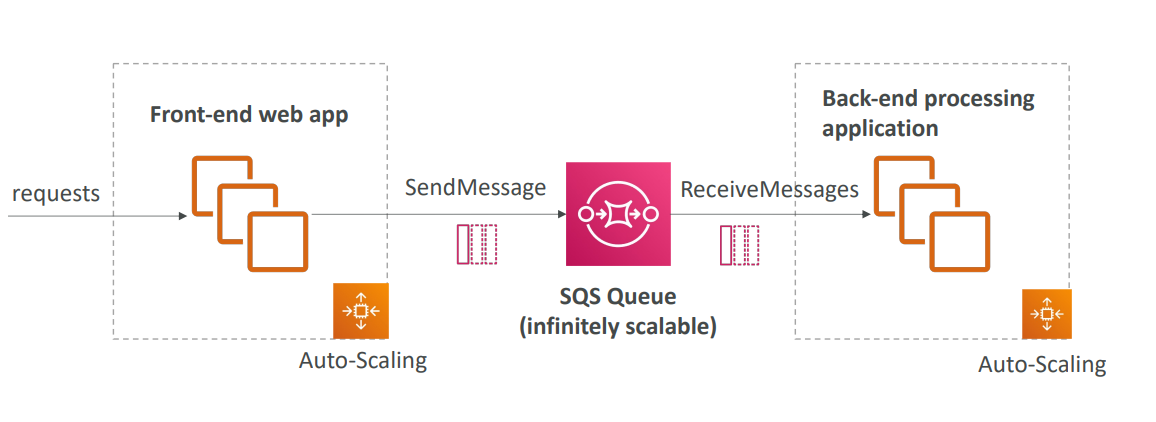
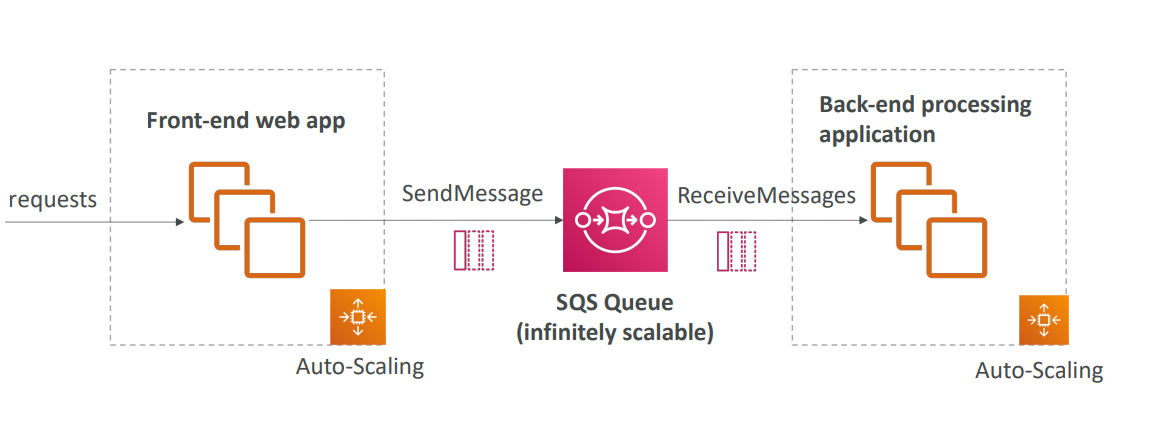
- SQS to decouple between application tiers
Security
Encryption
In-flight encryption using HTTPS API
At-rest encryption using KMS keys
Client-side encryption if the client wants to perform encryption and decryption itself
Access Controls
- IAM policies to regulate access to the SQS API
SQS Access Policies
Useful for cross-account access to SQS queues
Useful for allowing other services (SNS, S3) to write to an SQS queue
Message Visibility Timeout
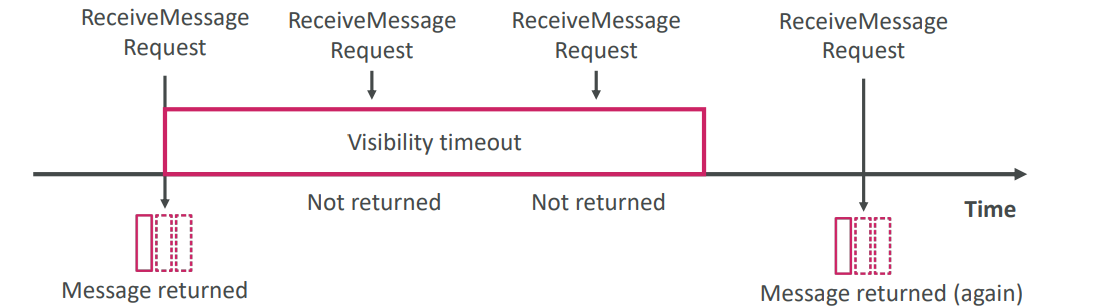
After a message is polled by a consumer, it becomes invisible to other consumers
By default, the
message visibility timeoutis 30 secondsThat means the message has 30 seconds to be processed
After the message visibility timeout is over, the message is “visible” in SQS
If a message is not processed within the visibility timeout, it will be processed twice
A consumer could call the ChangeMessageVisibility API to get more time
If visibility timeout is high (hours), and consumer crashes, re-processing will take time
If visibility timeout is too low (seconds), we may get duplicates
Long Polling
When a consumer requests messages from the queue, it can optionally
waitfor messages to arrive if there are none in the queueThis is called Long Polling
LongPolling decreases the number of API calls made to SQS while increasing the efficiency and reducing latency of your application
The wait time can be between 1 sec to 20 sec (20 sec preferable)
Long Polling is preferable to Short Polling
Long polling can be enabled at the queue level or at the API level using WaitTimeSeconds
FIFO Queue
FIFO - First In First Out (ordering of messages in the queue)
Limited throughput: 300 message per sec without batching, 3000 message per sec with
Exactly-once send capability (by removing duplicates)
Messages are processed in order by the consumer
SQS with Auto Scaling Group (ASG)
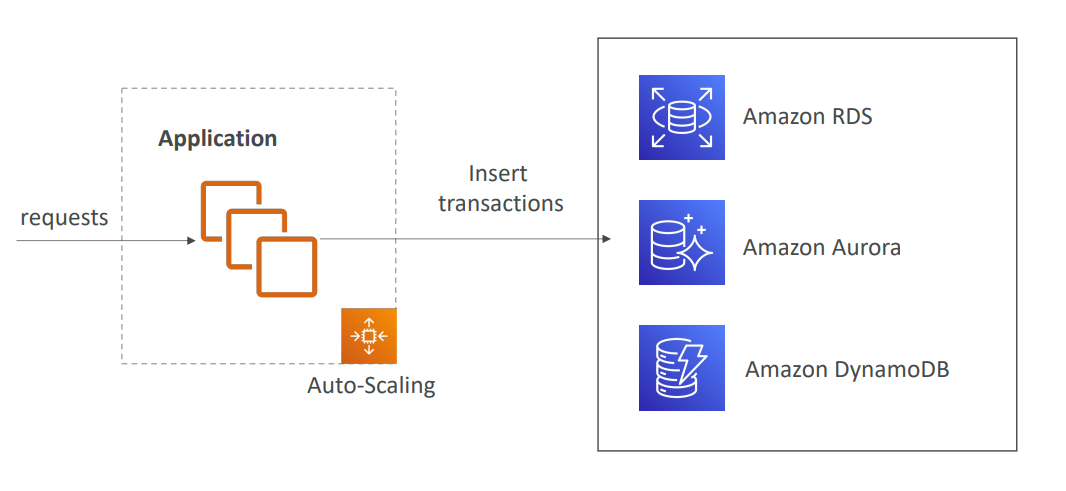
- If the load is too big, some transactions may be lost so in this cases SQS as a buffer to database writes would help
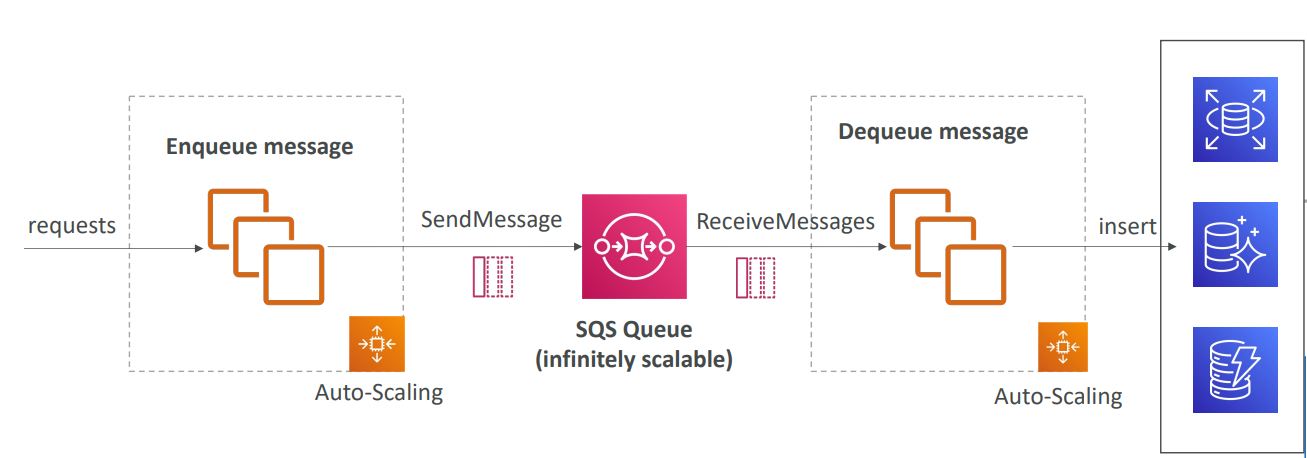
- SQS to decouple between application tiers
Relevant Doc:
https://docs.aws.amazon.com/AWSSimpleQueueService/latest/SQSDeveloperGuide/welcome.html
Disclaimer: This is a personal blog that might come in handy when I suffer from Dementia in future.